
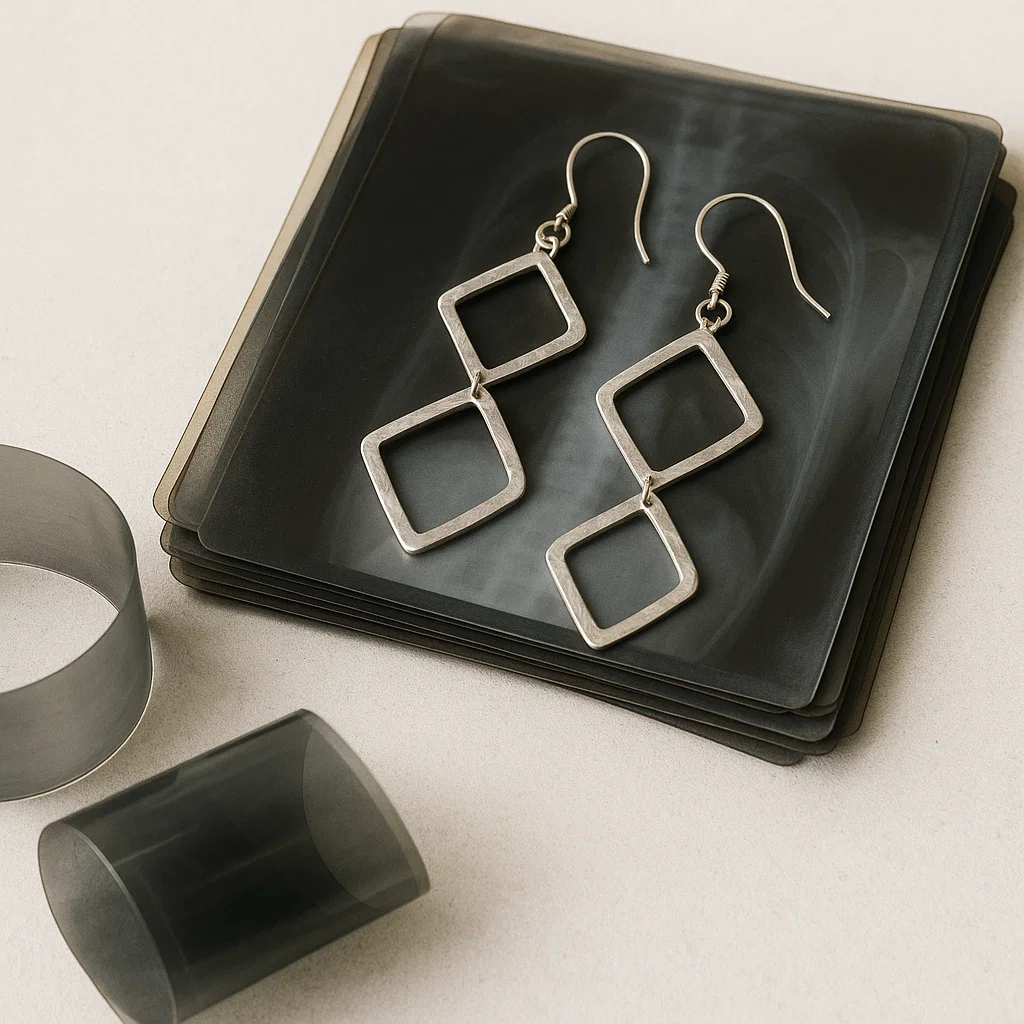
A piece of jewellery can begin long before it reaches the workshop. Before becoming a pendant, chain or pair of earrings, its material may already have lived another life.
That is the value of upcycling and recycled materials: existing resources are recovered, transformed and given a new purpose instead of relying entirely on virgin materials.
In jewellery making, this approach makes it possible to work with recycled silver from different sources while preserving the qualities that make silver a precious and durable metal.
What is recycled silver?
Recycled silver is recovered from existing materials and processed so that it can be used in new creations. Sources may include old jewellery, coins, industrial waste and X-ray films containing small quantities of silver.
After recovery, the metal is separated, purified and returned to the production cycle. It can then be used to create new jewellery without depending solely on newly mined resources.
From old X-ray films to new creations
Old X-ray films are one of the most interesting sources of recycled silver. For many years, films used for certain radiographs contained silver compounds. When the films are no longer needed, specialised processes can recover the silver they contain.
The metal is then purified and made ready for reuse. Material that might otherwise have become waste regains value and begins a new story in a completely different form.
Coins and old jewellery: keeping silver in circulation
Coins and jewellery that are no longer used can also provide recovered silver. A broken piece, an old chain or an object whose metal can be reclaimed does not have to mark the end of the material’s life.
Silver can be melted, purified and worked again. This allows the metal to move from one object to another and take on new forms over time.
Recycling and upcycling: what is the difference?
Recycling generally means recovering a material, processing it and using it as a raw material for something new.
Upcycling gives an existing material or object a new function or greater value, often with as little processing as possible. Both approaches aim to extend the useful life of resources already available.
Why choose materials that already exist?
Precious metals are finite resources. Reusing silver already present in objects, industrial waste and other materials keeps it in circulation for longer.
This is a more circular approach to creation: rather than considering a material unusable after its first purpose, we look at how it can be recovered and transformed.
The same philosophy can guide consumption: choose more carefully, favour pieces you intend to keep and care for what you already own.
Does recycled silver retain its quality?
A recycled metal is not automatically lower quality. Once properly recovered and purified, silver can regain the characteristics required for jewellery making.
This is one of the main advantages of precious metals: they can be recycled repeatedly. The material’s origin changes, but the silver can still be polished, hammered or shaped according to the artisan’s design.
When the material becomes part of the jewellery’s story
We are often drawn to the final form of a piece: its silhouette, texture or the way it catches the light. Yet the story of the material can be just as meaningful.
Knowing that some of the silver may have come from an old X-ray film, coin or piece of jewellery changes how we see the finished object. The material does not disappear; it is transformed.
A new life for a precious material
At Wateke, we favour recycled silver and select creations designed to last. The idea is simple: buy less, choose better and give greater value to the objects that accompany us.
From recovered material to a piece that is worn, every transformation adds a new chapter—because a precious metal does not have to be new to become something new.